
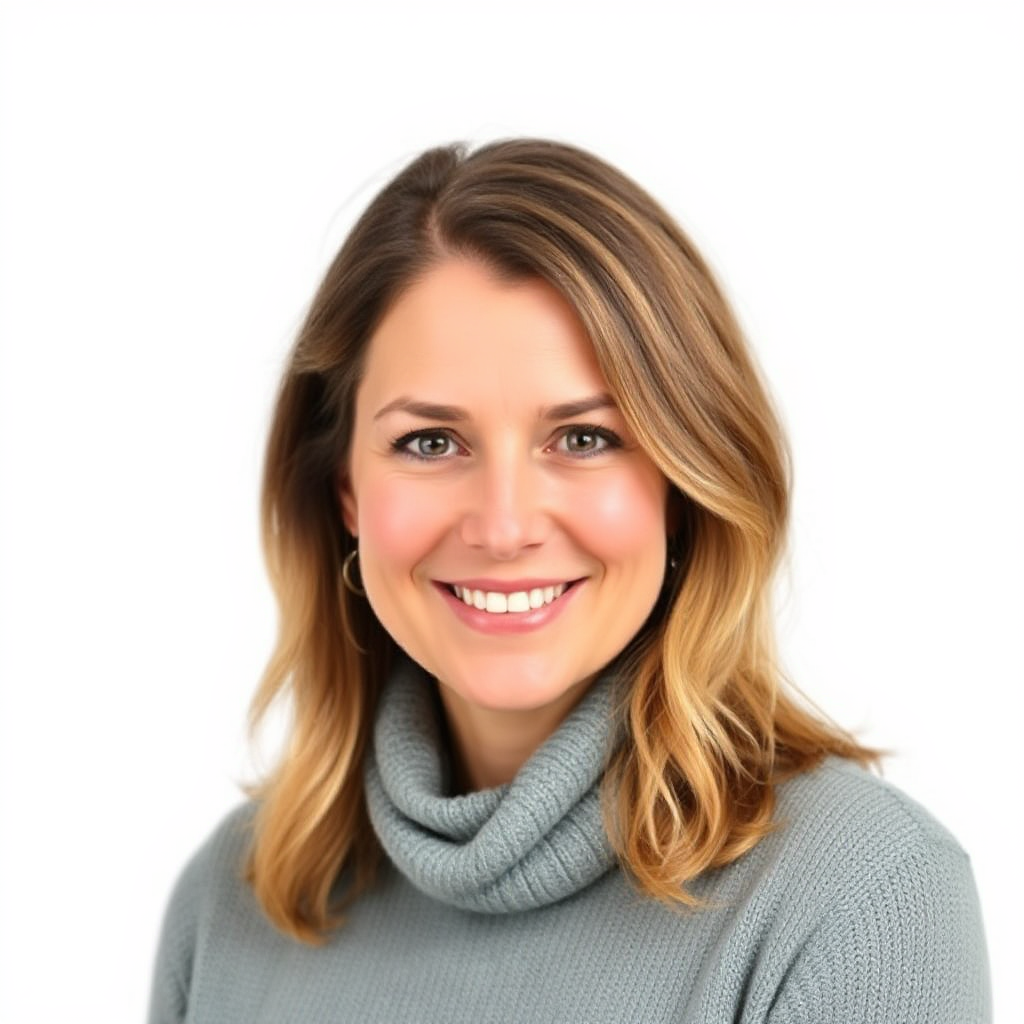
The former US vice-president Dick Cheney, who has died at the age of 84, was regarded as arguably the most significant occupants of that office in the nation's history. Although countless vice-presidents were limited to peripheral or symbolic roles, Cheney held huge sway during the presidency of George W Bush, to such an extent that he was often called as the "real president".
Bush disliked that description and said the dynamic was more complicated. He pointed out that Cheney was deferential, invariably addressing him in public settings as President, while he referred to him as Dick. Bush challenged even portrayals of their relationship as a collaboration because it implied that they were on equal footing. In spite of these objections, Cheney found the relaxed president malleable on a whole raft of policy decisions.
The Post-9/11 Era
Leading of a contingent of conservative hawks that included defence secretary Donald Rumsfeld and Pentagon second-in-command Paul Wolfowitz, he pushed hard for the armed incursion of Iraq in 2003 in reaction to the 9/11 attacks on New York and Washington. At the time of the 9/11 attack, Bush had been taking part in a session at a elementary school in Florida. While Bush headed for a secret bunker in Nebraska, Cheney took charge, ordering the shooting down of any unresponsive planes nearing the US Capitol.
Cheney stated the attacks transformed him, making him become intent on revenge. Along with other neo-conservatives, like Rumsfeld and Wolfowitz, he advocated for a invasion of Afghanistan in an endeavor to capture Osama bin Laden. Cheney then vigorously pushed for the invasion of Iraq, though there was no evidence of Saddam Hussein being involved.
Controversial Decisions
He showed no remorse about the armed intervention, in which an estimated 100,000 Iraqis perished, or about the enhanced interrogation of individuals apprehended after 9/11. He informed CNN in 2015 that the Iraq invasion effort, which was predicated on misleading reports circulated by Cheney, was the right path to take. "It proved to be the right thing to do then. I had faith then and I hold that view now."
Yet during that period, there were dissenting voices at a top tier about the mishandling of Iraq. One of the administration's own special envoys to the area, General Anthony Zinni (2001-03), was not retained from the position. "I witnessed, at the very least," he subsequently stated "true dereliction, inaction, and recklessness: in the worst case, falsehoods, incompetence, and corruption."
Wider Perspective
Cheney was not entirely responsible for the Iraq military action. Prior to 9/11, Wolfowitz had advocated for such action. He had written a document detailing situations in which national priorities might be endangered (encompassing "access to essential resources, mostly Persian Gulf oil"). Wolfowitz had argued that "the United States should be positioned to operate alone when cooperative measures cannot be arranged," particularly mentioning military moves against Iraq.
Bush too had arrived in the presidency generally inclined on executing what his parent had notably declined to do in 1991; topple Saddam. After he had been sacked by the White House, the Treasury head Paul O'Neill recounted how, at the initial gathering of the National Security Council in January 2001, Bush had announced his objective of lowering America's involvement in the Israeli-Palestinian conflict and mooted armed intervention against Iraq.
Bush carried a individual resentment against Saddam, believing he had been involved in a scheme to assassinate his parent, President George HW Bush, on a journey to Kuwait in 1993. He additionally resented that one of the largest accommodations in Baghdad had a ground design with a portrait of his father's visage that everyone had to step on.
Questioning Techniques
Yet it was Cheney who was one of the most outspoken supporting invading Iraq, repeatedly referencing information documents that were both thin or completely misleading. He backed what the Bush White House indirectly described as "advanced techniques", the employment of simulated drowning and torture.
Answering a Senate report in 2014 that determined that no valuable data had resulted from the torture, Cheney dismissed the conclusions as "full of crap". He informed Fox News: "We asked [the CIA] to establish protocols and create procedures to apprehend the bastards who took the lives of 3,000 of us on 9/11 and ensure it was not repeated. That was specifically what they did and they deserve a lot of praise."
External Perception
Cheney reveled in nicknames imposed on him by critics such as Darth Vader and the sinister presence, and by the notion that he was a shadow power manipulating Bush. In Peter Baker's 2013 volume about the pair, Days of Fire: Bush and Cheney in the White House, Cheney is quoted as saying: "Am I the malevolent mastermind in the background that remains unseen come out of his domain? That is a advantageous way to function, truthfully."
Commercial Ties
Dispute over his corporate affiliations accompanied him during his tenure as VP. While he had little experience in corporate affairs but established relationships in security, notably in Saudi Arabia, he was offered a position at Halliburton, one of the world's largest oil and gas corporations, in 1995 as chair and top executive.
In 2000 he became Bush's election partner for the executive branch. Debatably, during the Iraq war, Halliburton was given US agreements valued at billions.
It made him rich. His yearly compensation during his tenure at the firm grew from his $258,394 while military head to over four million. When he resigned in 2000 he had a severance arrangement valued at in excess of $20m|twenty

